By Arabella Windsor
There is something rather extraordinary about music. It is one of the few things in life that can transcend language, geography, culture, and even time itself. A melody written three centuries ago can still stir the same emotions today that it did when first performed, and a symphony composed in another age can speak to us as though its composer were sitting beside us, quietly sharing a very personal conversation.
In Second Life, where so much of what we experience challenges conventional notions of distance and reality, music possesses an especially remarkable quality. It brings us together.
For those who have never experienced the musical community within Second Life, it may come as a surprise just how rich, diverse, and deeply committed that community is. From intimate performances by solo musicians to lively clubs, jazz ensembles, elaborate rock concerts, and grand orchestral productions, music is woven into the very fabric of our virtual existence. It is entertainment, certainly, but it is also fellowship, artistic expression, cultural preservation, and perhaps most importantly, a shared experience. And what we experience together, we can talk about together, argue about together, or praise together. Music gives us something in common, even when our tastes are worlds apart.
As a member of both the Brody Symphony Orchestra and the Second Life International Symphony Orchestra, I have had the pleasure of experiencing one particular aspect of our musical world from a rather special vantage point: not simply as someone seated in the audience, but as someone who is part of the orchestra itself.
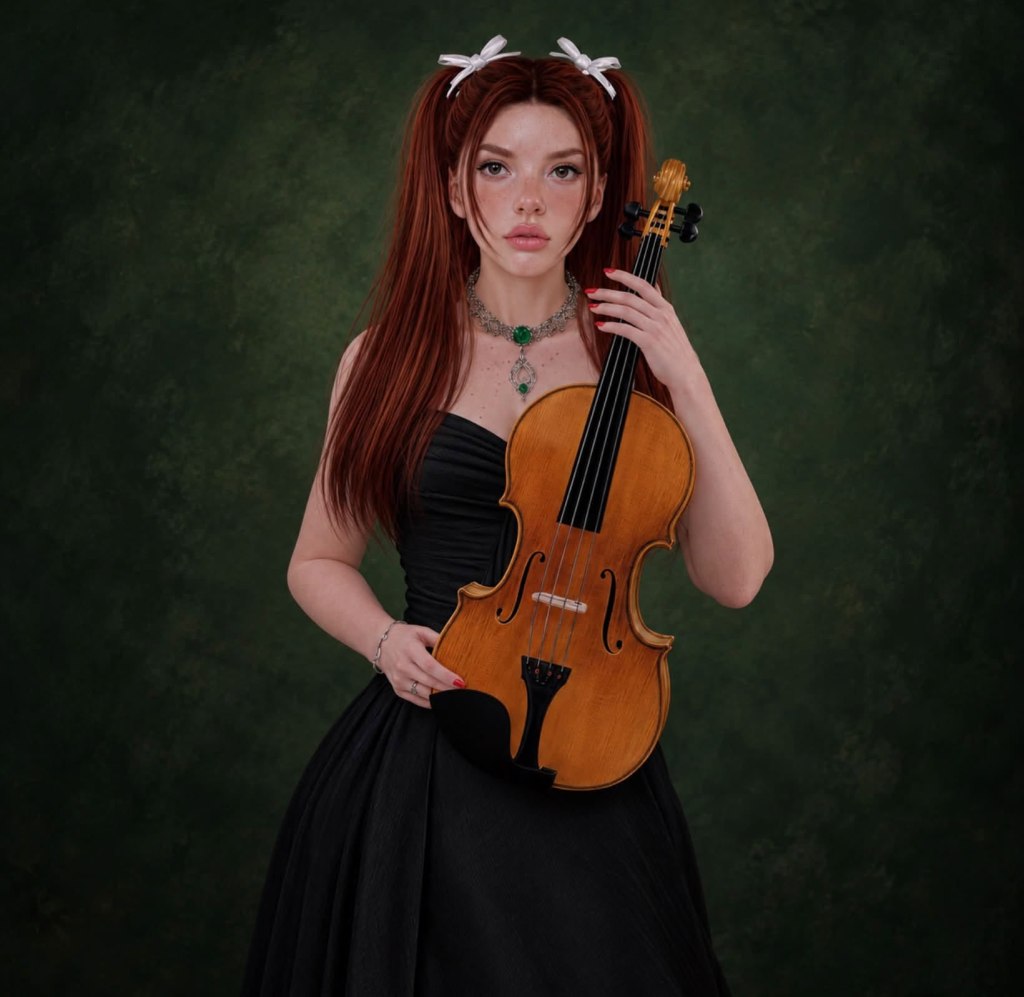
But my musical adventures in Second Life extend well beyond the concert hall. They have taken me from the grandeur of Mahler’s symphonies to the theatrical spectacle of modern rock, from intimate performances of familiar standards to some wonderfully eccentric musical productions that could probably only happen in a place like Second Life.
And I can tell you that there is something quite magical about all of it.
The Universal Language of Music
One of the great wonders of Second Life is its ability to bring together people who, under ordinary circumstances, might never have met.
We arrive from different countries, different cultures, different generations, and vastly different walks of life. Some of us are artists, some are writers, some are musicians, and many are simply people looking for a little companionship or a creative escape from the demands of everyday life.
Yet place us together in a concert hall, allow the opening notes of a familiar symphony to fill the room, and those differences suddenly become rather unimportant. The same is true when a favourite rock anthem begins playing in a crowded club, or when a singer delivers a familiar ballad that seems to resonate with everyone listening.
For the duration of the performance, we are sharing something.
We are hearing the same passages, anticipating the same crescendos, singing along to the same familiar lyrics, or experiencing those wonderful moments when the music seems to exist outside of time altogether. We may interpret what we hear differently, of course, but we are participating in a common artistic experience.
That, to me, is one of the most beautiful things about music in Second Life.
It is not simply that we can listen to music together. We can do that through countless other platforms. What makes Second Life different is that we can experience music together in a setting that gives the occasion a sense of presence.
We can dress for the evening, enter a beautiful concert hall, take our seats among friends and strangers, and watch a small ensemble or tremendous orchestra assembled upon the stage. Or we can throw on our favourite jeans, gather with friends beneath spectacular stage lighting, and dance our way through an evening of rock music.
The experiences may be very different, but the underlying appeal is much the same.The setting may be virtual, but the sense of occasion is very real.
Classical Music in an Unconventional World
Classical music occupies a particularly interesting place within Second Life.
At first glance, one might imagine that a virtual world known for its nightclubs, fantastical landscapes, creative experimentation, and sometimes rather eccentric inhabitants would be an unlikely home for the works of Mahler, Mozart, Beethoven, Tchaikovsky, or Rachmaninoff.
And yet, perhaps it is precisely the imaginative nature of Second Life that makes classical music so well suited to it.
Classical music has always been about more than sound. It is also about atmosphere, interpretation, tradition, and the relationship between performers and their audience.
Second Life allows us to recreate much of that atmosphere while also offering possibilities that would be difficult, expensive, or entirely impractical in the physical world.
A concert might take place in a magnificent European-inspired opera house, a cathedral, a formal garden, or a concert hall overlooking a landscape that exists only in someone’s imagination. The architecture, lighting, clothing, and presentation can all contribute to the musical experience.
For someone like me, who has always loved the intersection of art, architecture, design, and music, this is especially appealing.
A beautifully constructed performance space is not merely a backdrop. It becomes part of the experience, framing the music and giving the audience a sense of having stepped into something special.
Of course, virtual orchestras are not necessarily the same as traditional orchestras in which every instrumentalist is producing live sound in real time. The musical presentations generally employ recordings, streams, animations, and carefully coordinated performances. Live performers are sometimes part of the experience as well, with carefully choreographed musical selections providing their backdrop. But to dismiss the experience on that basis would be to overlook much of what makes it meaningful.
There is artistry in presentation, dedication in preparation, and considerable effort involved in bringing musicians, performers, and audiences together. Most importantly, there is a genuine appreciation for the music itself and that appreciation deserves to be celebrated.
Life Within the Orchestra
There is a difference between attending a concert and being part of the company that presents it.
As a sitting member of both the Brody Orchestra and the Second Life International Symphony Orchestra (SLISO), I have come to appreciate that distinction.
From the audience, an orchestra is often perceived as a single entity: a collection of musicians arranged upon a stage, united in the presentation of a musical work. From within the orchestra, however, it is also a community of individuals. This is especially true in Second Life.
Each person brings something of themselves to the ensemble. There are personalities, friendships, traditions, conversations, and those small moments of humour that inevitably arise whenever people spend time together pursuing something they love.
During performances of the SLISO, the orchestra works in seemingly perfect coordination above the surface, but behind the scenes, group chat is usually quite lively as our section leaders instruct us on when to start, when to stop, and which instruments should or should not be playing during particular passages.
Humour, such an elemental part of Second Life, is always present too. Bad puns, cracked jokes, and the occasional minor crisis are simply part of the experience. Hair refuses to attach, alphas overlap, an instrument stubbornly declines to appear where it belongs, or some other uniquely Second Life calamity threatens to disrupt the proceedings.
Fortunately, the audience generally sees a beautifully coordinated performance rather than the occasional controlled chaos unfolding behind it. An orchestra is, in many ways, a little society of its own.
It requires cooperation, mutual respect, patience, and a willingness to be part of something larger than oneself. No individual member is the entire orchestra. The beauty lies in the collective.
I find that especially meaningful in Second Life, where participation is entirely voluntary and where people often make considerable efforts to be present despite the demands of their real-world schedules.
We come together because we want to, because we appreciate the music, enjoy the companionship, and believe that the experience is worth preserving and sharing.
There is a lovely sense of belonging that comes with taking one’s place among fellow orchestra members, seeing the audience assemble, and knowing that we are about to contribute to an occasion that may become a cherished memory for someone attending.
It is a privilege I do not take lightly.
And, I confess, there is also something rather delightful about the opportunity to dress beautifully for a concert. I have always believed that a little elegance adds to almost any occasion, although I have been known to introduce the occasional unconventional touch to my formal attire.
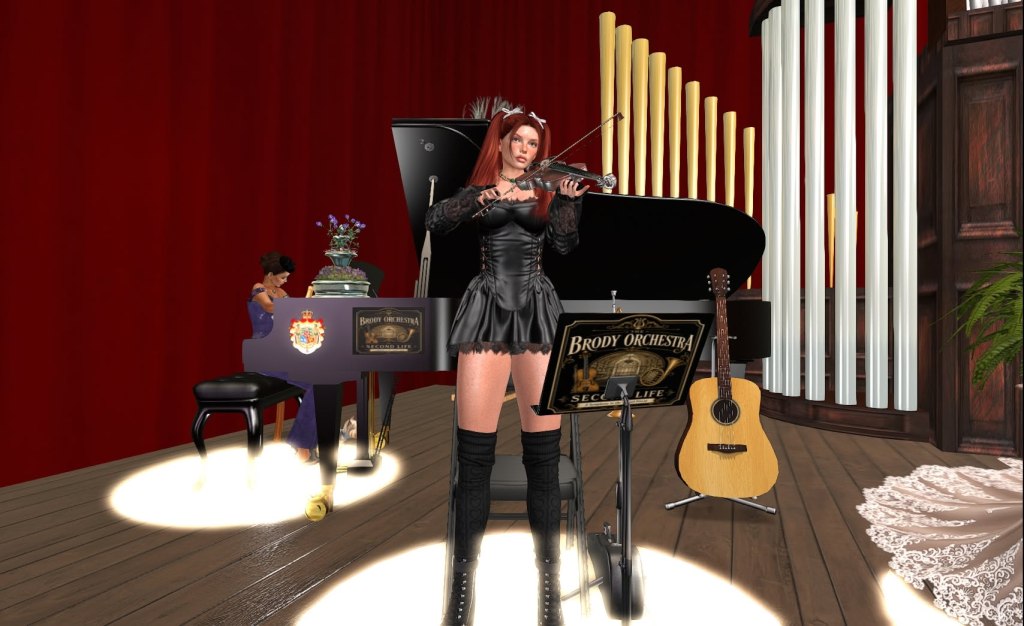
As a virtual violinist, I’m usually more Lindsey Stirling in style than Hilary Hahn. Tradition is wonderful, but it need not be entirely without personality.
The Audience Is Part of the Performance
One of the things I particularly appreciate about musical performances in Second Life is the relationship between those on stage and those who have come to enjoy the music.
In a conventional concert hall, the audience is generally expected to remain quiet throughout the performance, reserving its appreciation for the appropriate moments. There is a certain dignity to that tradition, and I respect it.
Second Life, however, introduces another dimension. The audience is not merely a collection of anonymous faces sitting in the darkness. They are often friends, acquaintances, fellow artists, and members of a larger community whose presence we recognise and value.
A concert can become a reunion, an opportunity to introduce someone to a new musical experience, or simply a pleasant afternoon spent in good company. There are conversations before the performance, greetings exchanged, compliments offered, and discussions afterward about favourite compositions or particularly moving passages.
Sometimes a person attends because they have loved classical music all their life. Sometimes they come because a friend invited them, or because they happened upon an event and were curious. I find the latter especially rewarding.
There is something wonderful about the possibility that someone who has never considered themselves a classical music enthusiast might discover, through a concert in Second Life, that a particular piece speaks to them.
Perhaps they recognise a melody from a film. Perhaps a dramatic orchestral passage catches their attention. Perhaps they simply find the atmosphere peaceful and beautiful. Whatever brings them through the doors, they become part of the experience, and that is how communities grow.
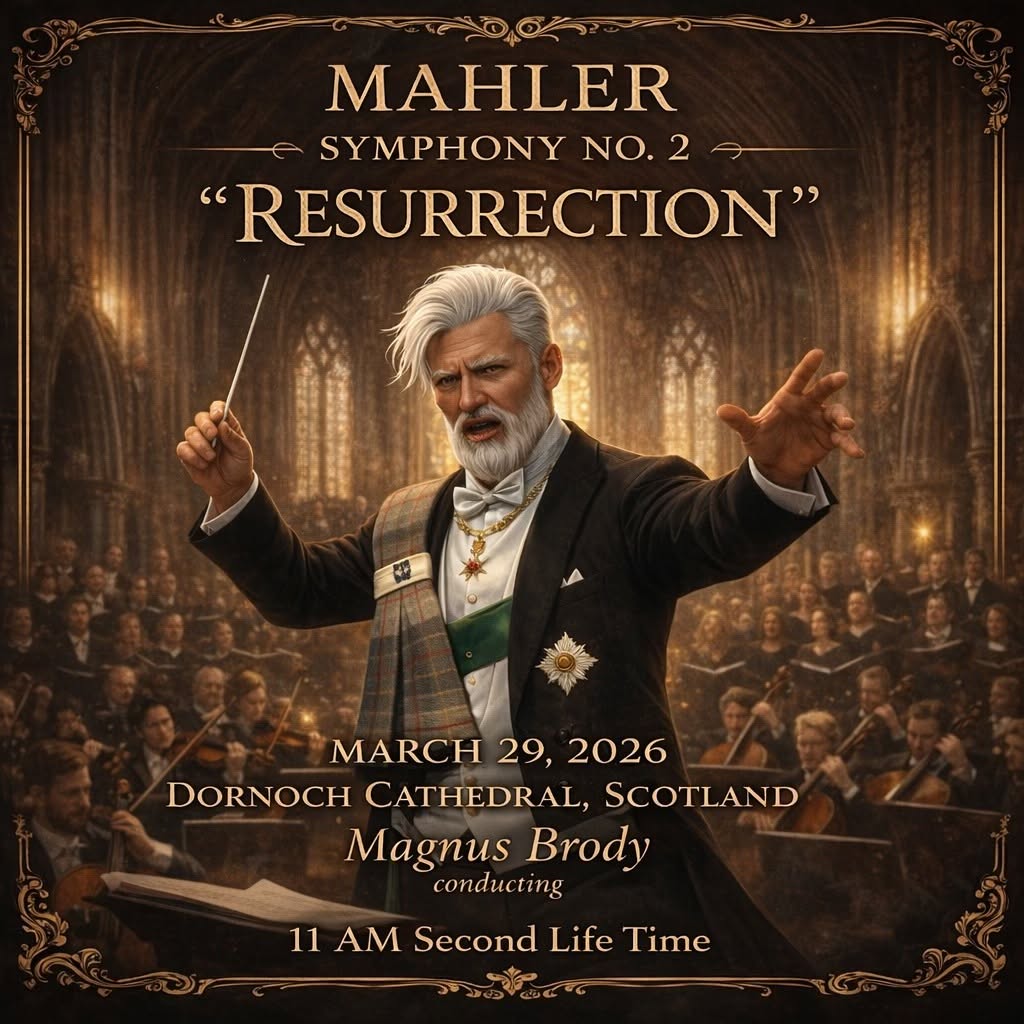
The Brody Symphony Orchestra has been performing weekly for two hours each Sunday for well over a decade under the baton of Magnus Brody, a well-known musicologist in the virtual world. Performing on stage in the great hall of Brody Castle, this small ensemble has changed faces over the years, but the music has continued.
Conductor Brody researches and brings orchestral music to the ears of all in attendance each week, ranging from the familiar classical works of the most famous composers to the significant talents of those many have never heard of, allowing the audience to experience music they might otherwise never have encountered.
Symphonic scores from motion picture greats such as John Williams, James Horner, Jerry Goldsmith, Hans Zimmer, and others are also featured in themed collections, reminding us that orchestral music is hardly confined to compositions written centuries ago.
A signature annual event is the performance, in its entirety, of Mahler’s Symphony No. 2, the Resurrection, on Palm Sunday. This is always held at the Cathedral Church of Dornoch, evoking the magnificent setting of Leonard Bernstein’s monumental 1973 performance of this masterwork at England’s Ely Cathedral. Guest performers from other musical groups are invited to help fill out the orchestra and choir, making this a must-see event.
On a much larger scale, the Second Life International Symphony Orchestra performs several times a year in seasons, much like a real-world symphony would.
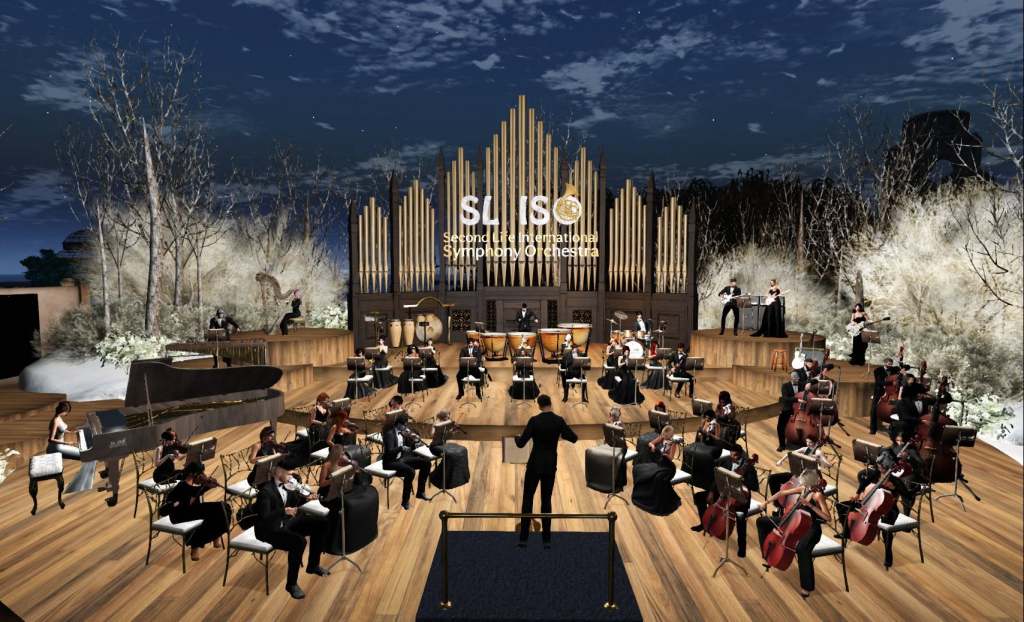
For these performances, highly choreographed orchestral pieces are presented by a full orchestra made up of more than 50 musicians, representing all the major instruments, together with a conductor and usually a live performance by SLISO Art Director Fly Kuggen or other selected Second Life musicians.
The size and scale of an SLISO performance generally require two adjoining regions to accommodate everything: one for the orchestra and stage, and another for the audience. This arrangement helps keep lag for the orchestra and its many scripted musical instruments to a minimum, making the visual impact of the performance more meaningful for the appreciative audience.
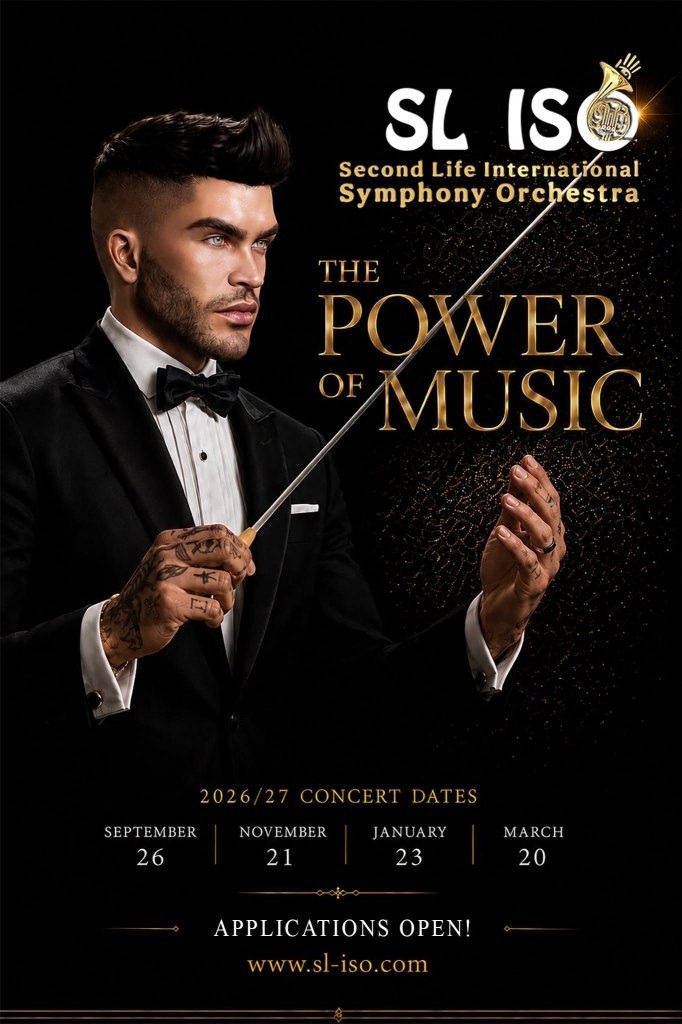
I first experienced the SLISO at SL22B in 2025 and was blown away by the entire production. Shortly thereafter, I went through the application process to become a member of the orchestra and have since participated in several seasonal concerts and a couple of their smaller ensemble events hosted at various locations around the grid.
Managing a large group like this requires considerably more than a leader waving a baton. Each instrumental section has a leader or manager who knows the music and keeps their section on task, and rehearsals are held ahead of each performance so that the musicians know what to expect.
The conductor’s platform, on the side visible to the orchestra, features panels that change colours to signal when we should start and stop. The entire performance carries much of the excitement of a real production, complete with backstage chatter, instructional discussions, and all the coordination necessary to make it work.
It is a remarkable undertaking, and one that demonstrates just how seriously people in Second Life can approach the presentation of music.
But while orchestras represent one particularly elegant expression of that dedication, the same spirit of creativity and collaboration can be found in almost every corner of Second Life’s musical landscape.
More Than Entertainment
We sometimes underestimate the importance of shared cultural experiences in virtual worlds. It is easy to regard Second Life primarily as a place of recreation, where we shop, socialise, explore, decorate homes, and pursue our individual interests.
But I believe its greatest strength has always been its ability to create genuine human connections through shared endeavours. Music is one of the finest examples of this.
And this is certainly not limited to orchestras or classical performances.
Consider the people who organise concerts, manage orchestras and entertainment groups, construct performance venues, prepare programs, coordinate schedules, develop animations, welcome guests, and promote events. Consider the DJs who spend hours preparing their sets, the live singers who share their talents with audiences around the world, and the production teams who turn a simple performance into something spectacular.
Their contributions are not always visible from the audience, but without them, the experience would not happen.
These are people giving their time and creative energy to provide something enjoyable and culturally enriching for others. There is a generosity of spirit in that which I find rather touching.
It is also worth remembering that music can offer something different to every person who encounters it.
For some, a concert provides a welcome escape from a difficult day. For others, it is a comforting routine, a social occasion, or an opportunity to revisit a beloved composition or song. Sometimes it is simply the pleasure of spending an evening laughing and dancing with friends.
For someone who may be isolated geographically or physically, attending a musical event in Second Life can provide a sense of participation in a cultural and social life that might otherwise be difficult to access.
And for those of us who participate in the performances themselves, the experience offers companionship, purpose, and the satisfaction of contributing to something worthwhile.
These are not insignificant things simply because they occur in a virtual environment. In fact, quite the contrary.
An Appreciation for Music, in All Its Forms
I have always felt that classical music should be accessible rather than intimidating. There is sometimes an unfortunate perception that one must possess a considerable musical education to appreciate a symphony, concerto, or operatic work.
I have never subscribed to that notion.
Certainly, knowledge can deepen appreciation. Understanding the history of a composition, the intentions of its composer, or the structure of a particular movement can make listening an even richer experience. But none of that is a prerequisite for being moved by music.
You do not need to understand musical theory to feel the melancholy of a cello, the exuberance of a violin passage, or the extraordinary power of a full orchestra reaching its crescendo, as it does in the finale of Mahler’s Second Symphony, for example.
You have only to listen.
In this respect, Second Life provides an especially welcoming opportunity to introduce classical music to new audiences.
There are no intimidating barriers to entry. One need not purchase an expensive ticket, travel to a distant city, or possess a wardrobe of formal evening clothes, although finding a lovely gown or tuxedo is certainly part of the fun for many of us.
One need only arrive with an open mind and a willingness to experience something beautiful. The music can do the rest.
I would like to think that the work of orchestras such as Brody and the Second Life International Symphony Orchestra contributes, in its own way, to keeping the appreciation of classical music alive and introducing it to people who might not otherwise seek it out.
After all, great music deserves to be heard, regardless of the medium through which it reaches us.
But I think that same philosophy should apply to all music. The joy of discovery, of encountering something unfamiliar and finding that it speaks to you, is hardly the exclusive province of classical composers.
Those who know me well know that my musical tastes are rather wide-ranging.
I love classic rock such as Pink Floyd, Led Zeppelin, and, of course, Queen. I adore progressive and symphonic rock too, and the opening notes of the Moody Blues’ Nights in White Satin will always bring a smile to my face.
Jazz music and vocal standards from Sinatra and his contemporaries are also favourites, and thankfully easy to find in the virtual world of Second Life.
There is something wonderfully satisfying about moving from an afternoon of Mahler or Mozart to an evening of Pink Floyd, or finding oneself in a coffeehouse listening to the timeless melodies of the Great American Songbook.
I don’t see these as contradictory interests. They are simply different expressions of the same love of music. And while revisiting old favourites is always enjoyable, what I find even more exciting is discovering new musical genres or groups I might never have encountered otherwise.
That is another of Second Life’s great gifts. Our friends, and the communities we become part of, have a delightful habit of introducing us to things we didn’t know we were missing.
A Voyage of Musical Discovery
Through friendships formed in recent years with some of the wonderfully creative people behind RagnaRock Entertainment, a Second Life entertainment company dedicated to bringing remarkably realistic, lifelike productions into the virtual world, I have discovered an entirely different dimension of musical performance.
My first experience of their full-scale stage production of Sleep Token left me utterly blown away, not simply by the music, but by the extraordinary attention to detail and the sheer immersive quality of the entire experience.
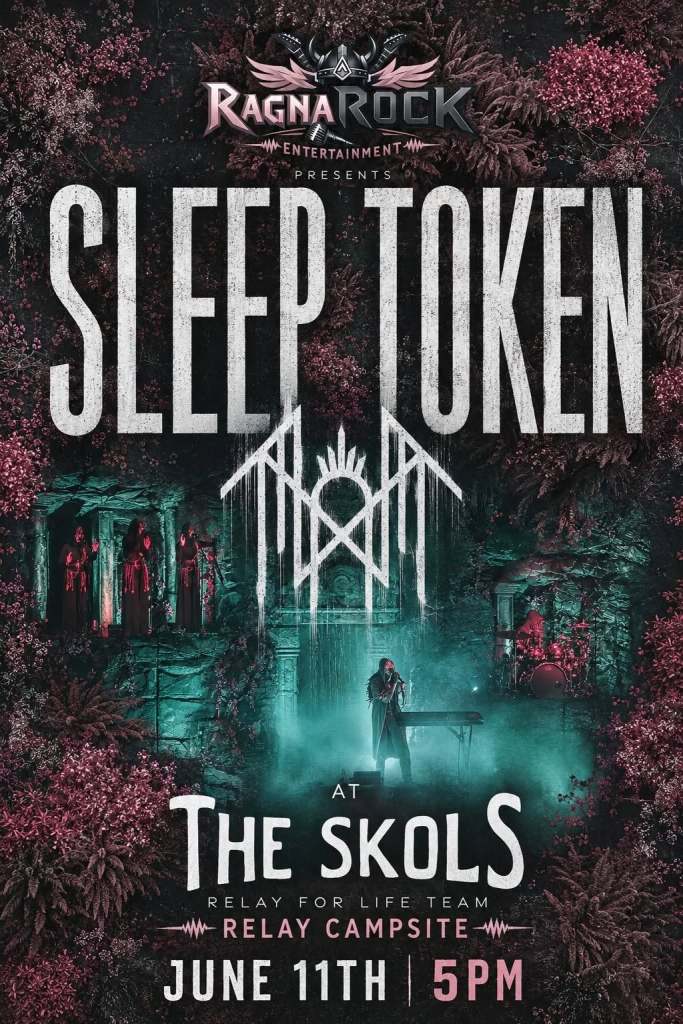
RagnaRock doesn’t simply place a few performers on a stage, hand them instruments, and call it a concert. They recreate the entire experience, designing elaborate stages appropriate to each production, complete with sophisticated lighting, carefully coordinated animations, choreography, costumes, and all the theatrical elements one would expect from a major real-world concert.
The result is something that feels less like watching avatars perform and more like attending an actual live show.
I’ve always believed that the gods are in the details, and the lengths to which the RagnaRock team goes to capture those details and bring them to life for their audiences are nothing short of extraordinary.
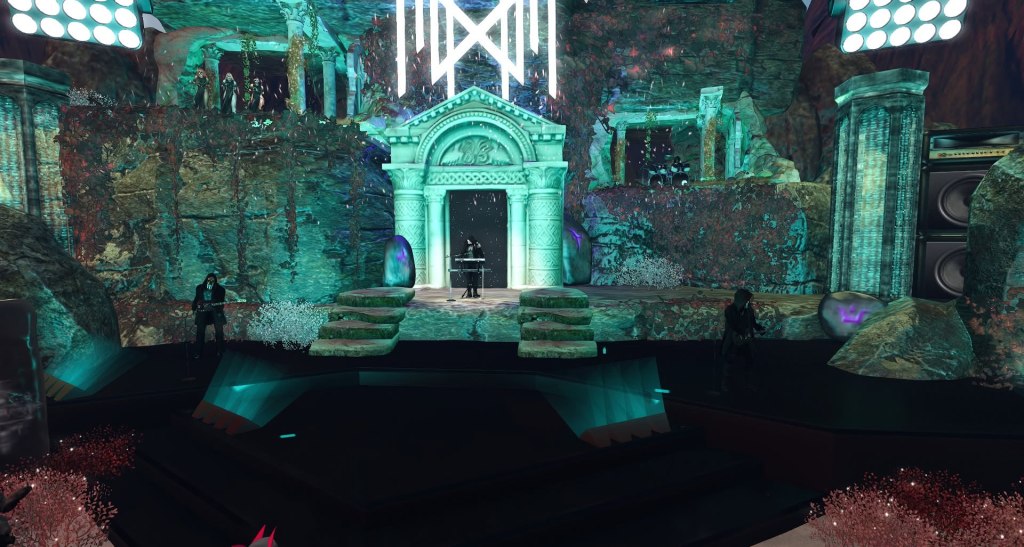
In many ways, I find their productions fascinating for the very same reasons that I enjoy being part of a symphony orchestra. The musical genres may be worlds apart, but the commitment to presentation, the coordination behind the scenes, and the desire to give an audience something memorable are remarkably similar.
Whether it is fifty musicians seated beneath the baton of a conductor or a theatrical rock band performing amid spectacular lighting and stage effects, the underlying artistry is much the same.
Through their productions, I’ve also been introduced to The Pretty Reckless and several other bands whose music I might not otherwise have discovered.
Their concerts are invariably great fun, particularly when enjoyed in the company of a lively group of friends, preferably with someone else’s dance HUD taking responsibility for your moves. After all, there’s something wonderfully liberating about surrendering control of your feet and letting someone else worry about whether you’re dancing in time!
And then there are the Dinkies.
Yes, RagnaRock even has a troupe of Dinkie performers, the Syndicats, who make appearances at events around the grid, and it was through one of their performances that I was introduced to the music of Ghost.
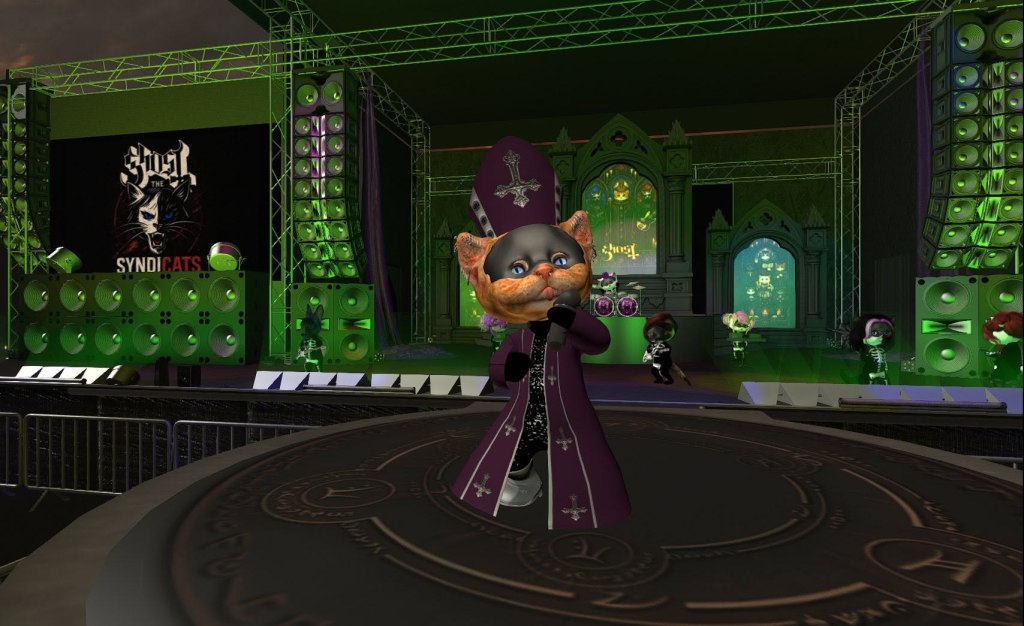
I must confess, there is something utterly irresistible about watching a collection of adorable, cuddly little Dinkies enthusiastically embracing their inner heavy-metal rock stars.
It is precisely that delightful combination of creativity, humour, musical discovery, and shared enjoyment that makes entertainment in Second Life so special.
Where else can you experience the theatrical spectacle of a major rock concert one evening and find yourself cheering on a troupe of pint-sized metalheads the next?
And the wonderful thing is that none of these experiences diminishes the others. If anything, they enrich one another.
I can spend a Sunday afternoon immersed in a great symphonic work, enjoy a jazz performance later in the week, and find myself dancing beneath the lights at a rock concert by the weekend. Each offers something different, but all share that wonderful ability to bring people together.
Perhaps that is the real beauty of musical discovery in Second Life. We arrive with our own tastes and preferences, but through the enthusiasm of others, our musical worlds become just a little larger.
The Friendships Between the Notes
If I were asked what I value most about my involvement with the orchestras in which I perform, or my experiences as an audience member at rock concerts, jazz performances, and other musical events, I suspect my answer would surprise those expecting me to name a favourite composer, band, or particular performance.
It would be the people.
Music may be the reason we gather, but friendship is often the reason we return. Over time, familiar faces become friends. Fellow orchestra members become people whose company we look forward to. Concert venues become places associated with pleasant memories, and particular pieces of music begin to remind us of the occasions on which we heard them together.
The same is true of the people we meet in clubs, at concerts, or while dancing beneath the stars. Sometimes the music itself becomes almost secondary to the pleasure of being together, although it is usually what brought us there in the first place.
This is something Second Life does remarkably well.
It allows relationships to develop around common interests, without many of the geographical and social limitations that might otherwise keep people apart. And because music is such an emotional art form, the friendships formed around it often carry a special warmth.
We share not only conversation but also moments of beauty, excitement, reflection, laughter, and sometimes even sadness.
Those experiences become part of our collective history.
I think there is something particularly lovely about the way music becomes intertwined with our memories of people and places. A familiar melody can remind us of a friend, a particular concert, or an evening that turned out to be far more memorable than we ever expected.
Sometimes those memories are of grand performances in magnificent surroundings. Sometimes they are of a small gathering where the music was good, the conversation was better, and nobody particularly wanted the evening to end.
A concert lasts perhaps an hour or two, but the friendships and memories surrounding it can endure for years.
When the Final Notes Fade
At the conclusion of a concert, there is always a moment I particularly enjoy.
The final notes have sounded. The performers remain assembled upon the stage. The audience offers its appreciation, and gradually the formal occasion gives way to conversation and the familiar bustle of people preparing to depart.
In a concert hall, the orchestra will eventually leave the stage and the audience will drift away. At a rock concert, the lights will dim, the dancing will stop, and the last few friends will linger to exchange goodbyes. In a small jazz club, perhaps someone will remain for one final conversation before the evening draws to a close.
Soon the venues will be empty.
The beautiful gowns and formal suits will be put away, at least until the next performance. The musicians, performers, and audience members will return to their other pursuits, scattering across the many regions and communities that make up our extraordinary virtual world.
But something remains.
For a brief period, people who might be separated by thousands of miles have occupied the same imaginative space, listened to the same music, and participated in the same cultural occasion.
They have shared something beautiful.
And in a world that can sometimes feel increasingly divided, distracted, and disconnected, I think there is considerable value in that simple act of coming together.
My membership in the Brody Symphony Orchestra and the Second Life International Symphony Orchestra has given me an appreciation not only for the music we present, but for the wonderful community that surrounds it.
My attendance at events presented by others, whether it be a Scottish ceilidh band, a spectacular rock production, or a band of marauding Dinkies, gives me an equal appreciation for the passion, imagination, and talent that others bring to the experience.
And perhaps more importantly, it reminds me that there is always something new to discover, someone new to meet, and another memorable evening waiting just around the corner.
I am grateful for the friendships, the opportunities, the elegance of the performances, the exuberance of the concerts, and the dedication of everyone who helps make them possible.
Above all, I am grateful that Second Life provides a place where music, in all its wonderful forms, can continue to be enjoyed, celebrated, discovered, and shared.
Because whether we are seated in a magnificent concert hall in Vienna, standing beneath the vaulted ceiling of a centuries-old cathedral, dancing in a crowded nightclub, or gathered on a beach watching Sleep Token perform amid spectacular ruins beneath spectral lighting, the essential experience remains remarkably similar.
The music may change. The setting may change. We may be dressed in elegant evening gowns, faded blue jeans, or even the furry little bodies of heavy-metal Dinkies.
But the reason we are there remains much the same.
We come together. We listen. We feel.
And for a little while, the music reminds us that we are part of something greater than ourselves.
And really, isn’t that what the finest music has always been about?
~ Arabella
Post Notes:
Brody Orchestra at Brody Castle (Performs Sundays at 11AM SLT): https://maps.secondlife.com/secondlife/Inverness%20City/183/190/22
Second Life International Symphony Orchestra Home: https://maps.secondlife.com/secondlife/Knowingly/43/233/26
SLISO Website: https://www.sl-iso.com
RagnaRock Entertainment Facebook Page: https://www.facebook.com/profile.php?id=61568449755350
The Cathedral Church of Dornoch: https://maps.secondlife.com/secondlife/Dornoch/113/102/22
RagnaRock Poster courtesy of RagnaRock Entertainment
Brody Orchestra Logo courtesy of Cottagecore Girl
SLISO Poster courtesy of Second Life International Symphony Orchestra
Feature Article Sponsored By:

Thank you for visiting Second Glances with Arabella!




Leave a Reply