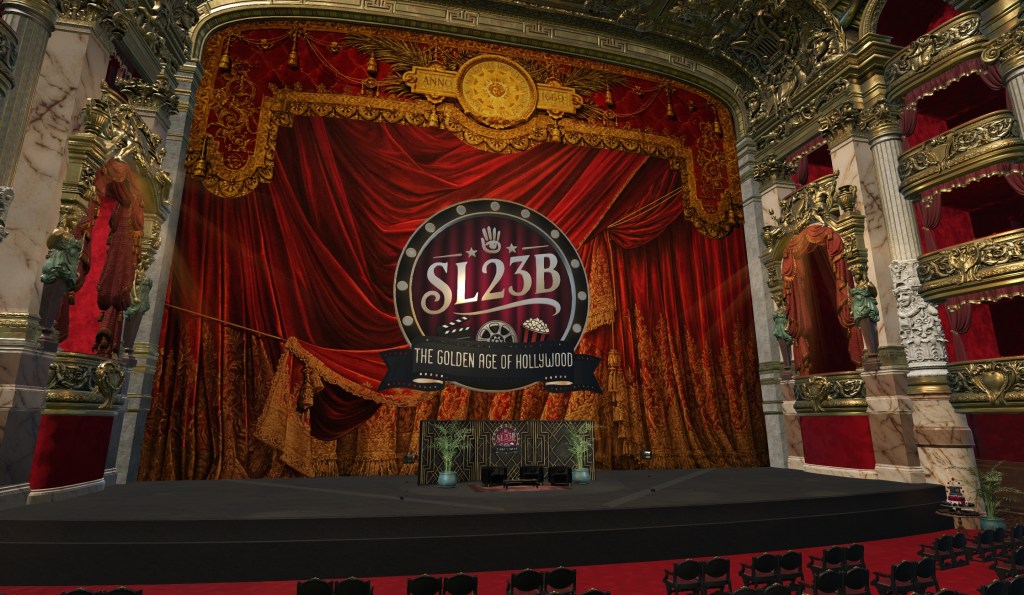
by Arabella Windsor
There are few moments on the Second Life calendar quite like the annual Birthday Celebration, nor one that elicits quite as much anticipation from residents of our virtual world.
Every June, the grid seems to undergo a transformation. Entire microcontinents appear where only ocean existed weeks before. Vast exhibition and performance halls rise from the empty regions. Music echoes across newly constructed stages. Crowds gather beneath impossible architecture, photographers roam with cameras in hand, and somewhere, at almost every hour of the day, someone is singing, speaking, dancing, teaching, performing, or celebrating.
For visitors, it is a month-long festival.
For hosts, stage crew and others working behind the scenes it is something altogether different.
Hosting an event during the Second Life Birthday Celebration is one of the most rewarding—and surprisingly demanding—experiences a resident can undertake. It is equal parts performance, logistics, hospitality, technical troubleshooting, community management, and improvisational theatre, all compressed into one or two hourlong increments, that often represents weeks, even months of preparation.
As the SL23B celebrations unfold throughout this month and into next month, that reality is once again playing out behind the scenes across dozens of performance stages and event venues. This year’s celebration, themed The Golden Age of Hollywood, continues the tradition of combining spectacular resident exhibits with an extensive schedule of live entertainment, discussions, performances, and community events that stretch across an entire month.
Yet visitors often see only the polished result. They rarely see what came before.
Long Before the Curtain Rises
By the time an event appears on the official schedule, much of the work has already been completed. Applications have been submitted well in advance. Time slots have been requested and assigned. Musicians have recorded promotional material. DJs have prepared playlists. Speakers have refined presentations. Communities have coordinated volunteers. Performers have rehearsed choreography and theatrical showcases. None of this is accidental.
Unlike a typical venue event, SLB represents one of the largest concentrations of visitors anywhere on the grid. An audience of fifty or sixty avatars is not unusual. Triple-digit attendance is entirely possible for popular performers and Linden-hosted events, some of which are spread across venues built spanning multiple regions to allow several hundred to attend, and that changes everything.
Stage crew members begin thinking differently. Will voice work properly? What if region performance drops? Do we have backup stream URLs? Has everyone received the landmarks? Who is greeting arrivals? Who is handling moderation? Who watches local chat while someone else speaks in voice?
These are not glamorous questions. They are the questions that determine whether an event feels effortless—or chaotic. If done correctly, an SLB event glide above the surface like a graceful swan on water, even if there are duck feet paddling madly just beneath the surface. The calmness is part of the show, or the side people need to see, but back in the wings, much is going on. I learned all about this as an SL23B Stage Crew member this year, an experience that has been both terrifying and rewarding.
The (Mostly) Invisible Crew
Perhaps the greatest misconception about hosting an SLB event is that the person on stage is doing all the work. In reality, successful events are almost always team efforts. Greeters welcome newcomers, help visitors find seating if needed, distributes landmarks and more. Oftentimes someone answers questions in local chat if the event is a speaking presentation.
Someone quietly restarts a music stream after noticing silence before anyone else does. Someone calms the nervous performer who is convinced everything has gone wrong despite the audience having noticed nothing. These are members of the Stage Crew, the ones running around with virtual clipboards and multiple IM windows open, getting people where they need to be, when they need to be, checking everything off, testing streams, encouraging performers and being there through each DJ set, each live singer, each motivational speaker and each Cirque de Soleil level event that takes place.
Their names may never appear on promotional posters, yet they are often the difference between an event people merely attend and one they genuinely remember. Hospitality has always been one of Second Life’s greatest strengths, and nowhere is that more apparent than during the Birthday Celebration.
The Learning Curve
I had already decided as I walked around the mind boggling performance venues of SL22B last year that I was going to apply to be part of the SL23B stage crew. I had been a spectator many times before that, and thought maybe it was time I see the other side of the coin and gain a new perspective. I enjoy hosting events, chatting to people and cheering performers on, and I felt I had gained a lot of valuable experience already, hosting at large events such as Christmas Expo and Living Expo, and that this experience would be beneficial to learning about the roles of an SL23B stage crew members, so I applied to be part of it. While that experience was certainly useful to me on a certain level, training for the stage crew taught me that to be part of something this big, this orchestrated and this schedule-dependent required a lot more than just hosting duties.
Training for stage crew began well over a month before the first event actually happened, and was a multistage process. Once we were notified that we had been accepted into the training program, the first step of the process was receiving and getting to know the manual, which has been developed over the years of SLB. The manual is a fairly lengthy and comprehensive publication that covers the duties of stage crew members, the different roles such as Stage Volunteer, Stage Manager and Stage Coordinators. You start out as a Trainee with several requirements to reach the Volunteer level: to read and know the manual, to sign up for time slots on the schedule, to attend a training session on the manual, and to attend at least one role play session where you practice on a mock stage the various roles of a stage crew member. All of this is done under the guidance of highly experienced Stage Managers and Coordinators and even returning stage crew are required to refresh again on the various training aspects of stage crew roles because things change.
I ended up attending multiple sessions on both the manual and role play sessions, learning each of the three roles of a volunteer: Host, Front of House (FOH) and Back of House (BOH) and in hindsight, I’m very glad I did this. I initially felt very uncertain about my own ability to learn and adhere to the structured system here when I was mainly used to “wing it” scenarios so often associated with working a stage area. I’ve since learned that the structured approach is best when dealing with an SL23B event, even though winging it still might happen at times. I’m also glad I took the time to audit another team as they worked several events in a row so I could see the process play out in real time.
Veteran stage crew eventually learn one universal truth. Something will go wrong. Perhaps the performer disconnects or voice refuses to cooperate. Perhaps the stream fails or an unexpected region restart interrupts everything. Perhaps fifty people arrive all at once, overwhelming local chat or creating a lag wall that takes a bit of time for the system to compensate for.
Experience does not eliminate these problems. It simply teaches you not to panic. Some of the most memorable SLB events over the years have succeeded precisely because the stage crew adapted gracefully when technology decided to remind everyone that virtual worlds remain, at their heart, wonderfully unpredictable places.
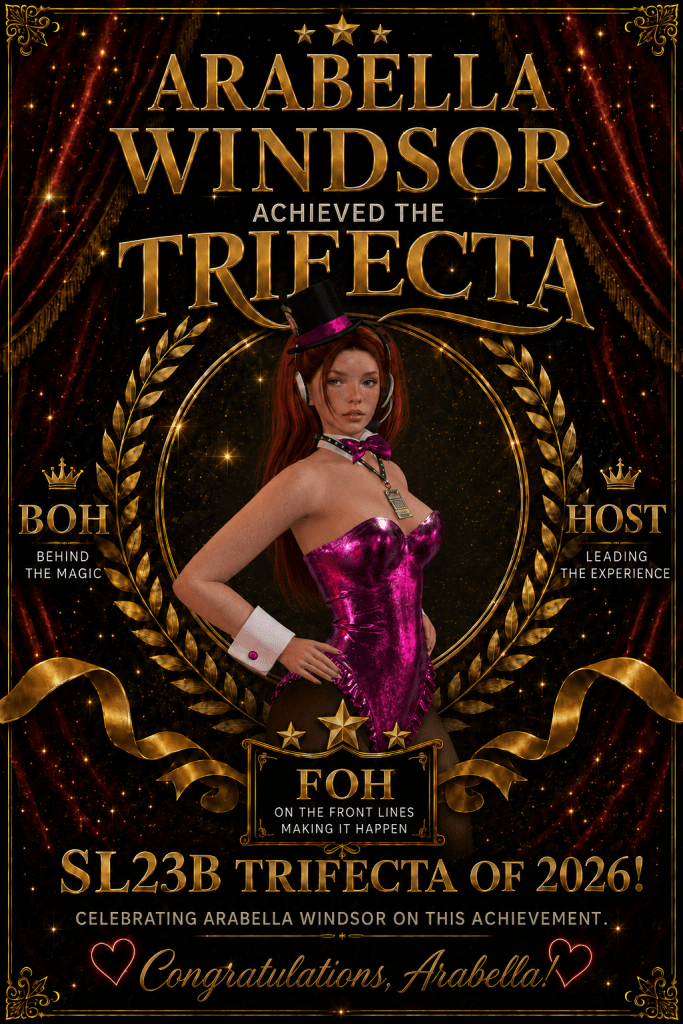
The audience rarely expects perfection. They do appreciate composure. I learned that quickly from watching the experienced Stage Managers and Coordinators who were responsible for keeping multiple events running on an hourly schedule across five different venues. I even managed to earn the coveted Trifecta badge for performing all three roles in a single shift on my second day of events. It was an exhilarating rush to say the least. When you achieve it, you get a trophy and a nice poster and shout out in the stage crew group…but more than that, you get a sense of accomplishment, something that doesn’t always happen in SL.
Hosting History
There is also something uniquely meaningful about hosting or managing an event during SLB because the celebration itself has become part of Second Life’s institutional memory. Every birthday adds another layer to the world’s history.
Residents who performed ten or fifteen years ago return to perform again. Communities that exhibited at SL10B welcome newcomers to SL23B. Volunteers who once arrived as curious first-timers now find themselves mentoring the next generation of crew members. Second Life has reached an age where many traditions are now old enough to have traditions of their own.
Crewing an event means becoming part of that continuing story. Years from now, someone will remember attending a concert you played a small part in. Someone else will remember a presentation. Someone may discover a friendship because they happened to sit beside another avatar waiting for an event to begin. Virtual worlds often preserve memories in unexpected ways.
The Birthday Celebration schedule is often viewed simply as a calendar of performances but in reality, it much more than that.
Each event represents a community choosing to share something of itself with the wider grid, whether that be a live musician offering an hour of original artistry or a roleplay community demonstrating years of collaborative storytelling. Below is an example of some of the creative power events that come to SLB each year.
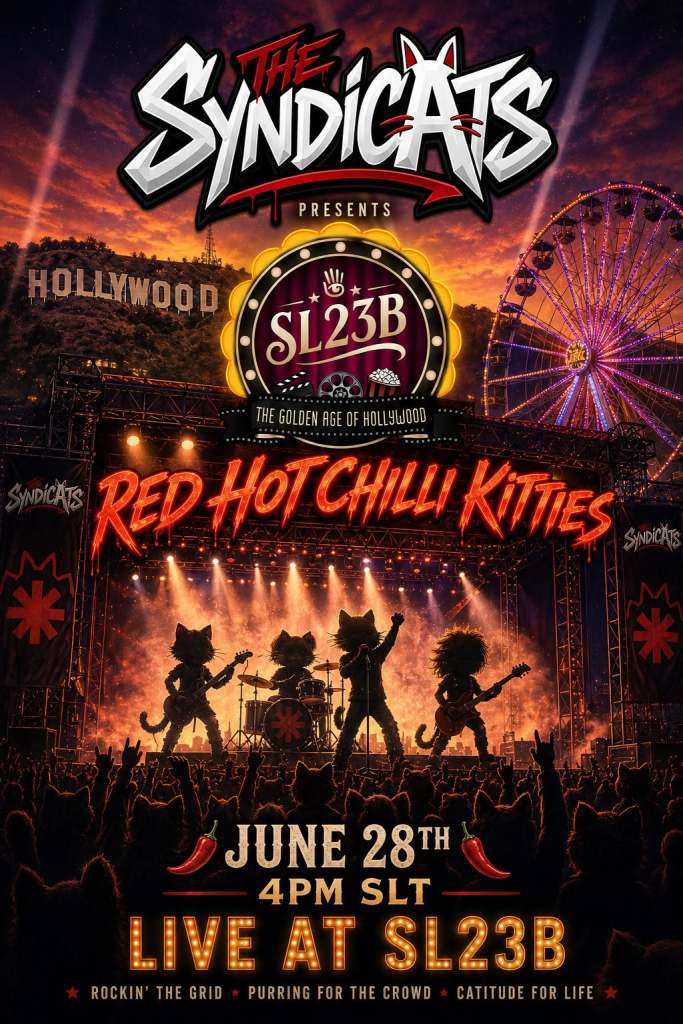
An educational presentation preserves knowledge that might otherwise disappear, while a discussion panel records another chapter in Second Life’s evolving history.
A DJ set becomes an excuse for old friends to reunite at a special place with special meaning. In many cases, the event itself is only part of the experience as the conversations afterwards often last longer than the scheduled performance.
The Audience Matters Too
One of the overlooked truths about being part of the SLB stage crew team is that audiences contribute almost as much as presenters. An engaged audience transforms an ordinary performance into something unforgettable. Applause in local chat, laughter, questions, encouragement, photographs shared afterwards, blog posts, Flickr albums, social media coverage…every visitor becomes part of the event’s legacy.
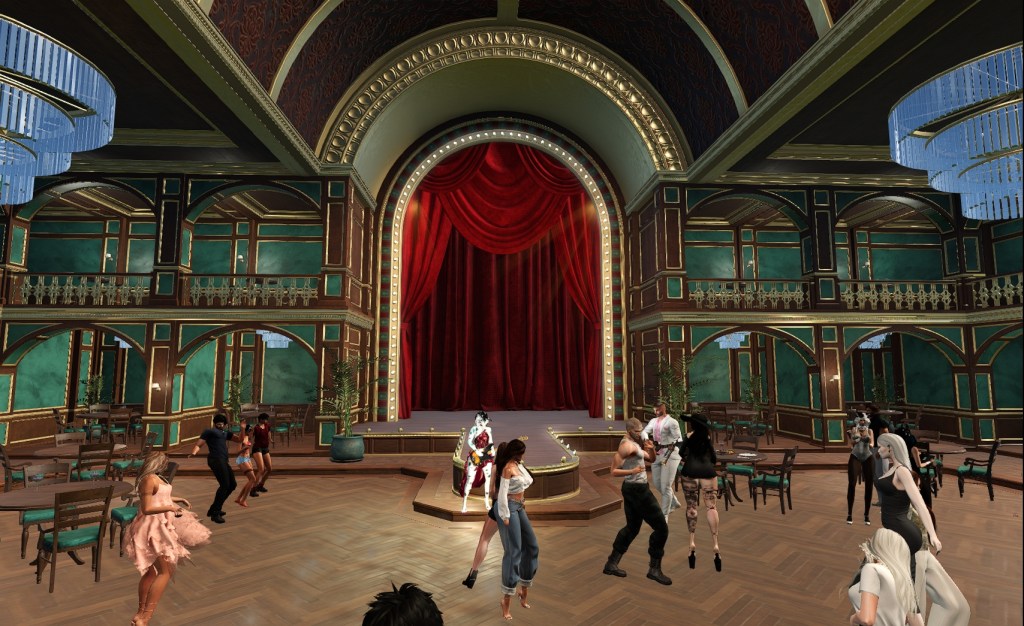
Unlike traditional media, Second Life audiences are participants rather than spectators and their reactions shape the atmosphere just as surely as the person standing on stage does.
When the Lights Go Down
Eventually every event ends, the stream fades and the last applause appears in local chat. People exchange goodbyes before teleporting off to the next destination, and the stage grows quiet again.
For the audience, that experience is over. For the stage crew, there is usually one final moment, when they stand backstage—or wherever backstage happens to exist in a virtual world—and breathe. A shout out, or a high five from the stage manager on another smooth transition done. Another successful event completed, and another contribution made to a celebration that has endured for a long, long time. Then they do it all over again for the next act and the next, until the last act is done and it is time for everyone to go home.
The exhibits will eventually disappear. The temporary regions will return to ocean. The stages will be dismantled. The banners will come down.
But the moments shared there—the conversations, the performances, the laughter, and the friendships renewed—will remain part of the living history of Second Life.
And perhaps that is the real purpose of working on an event during the Birthday Celebration…not simply to entertain, nor to merely fill an hour on the schedule…but to help write one more page in the extraordinary, ever-growing story of a virtual world that continues to prove, year after year, that its greatest creation has never been its technology.
It has always been its people.
SLB23 continues its run through July 19th. Enjoy the events, enjoy the sights and enjoy the little piece of history that you’re getting to experience, crafted by thousands of people. Even though the venues events will wind down on June 28th, the regions will continue on through the 19th of July so there is still plenty of time to visit!
See you from the wings!
Arabella
Post Notes:
Orpheum Theatre Main Stage Venue: https://maps.secondlife.com/secondlife/SLB%20Amaze/233/8/31
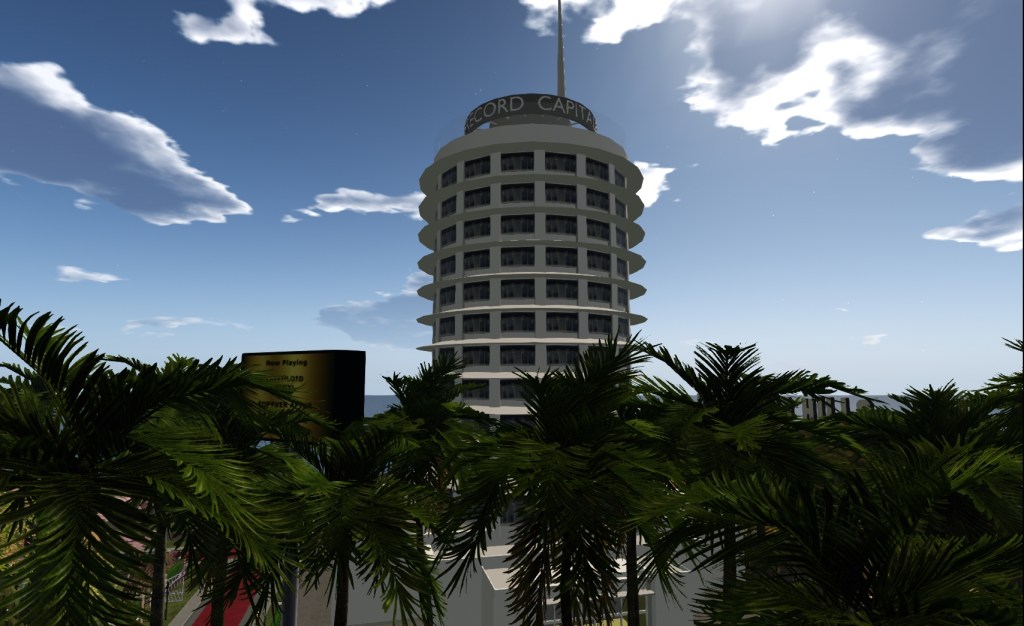
Capitalism Records Building: http://maps.secondlife.com/secondlife/SLB%20Awesome/136/139/35
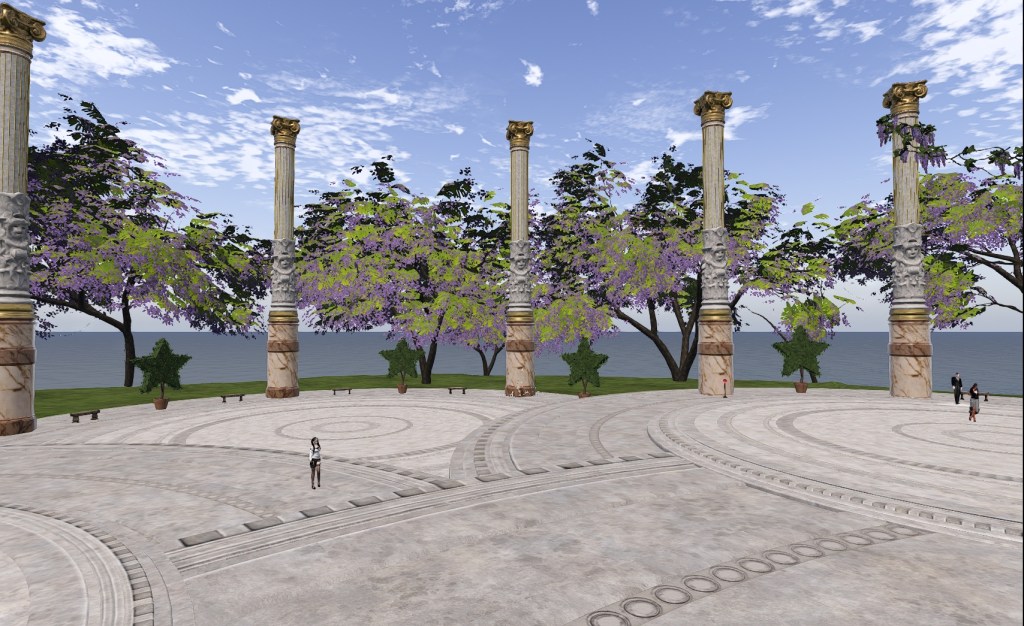
Wisteria Grove Amphitheater: https://maps.secondlife.com/secondlife/SLB%20Astonish/162/140/31
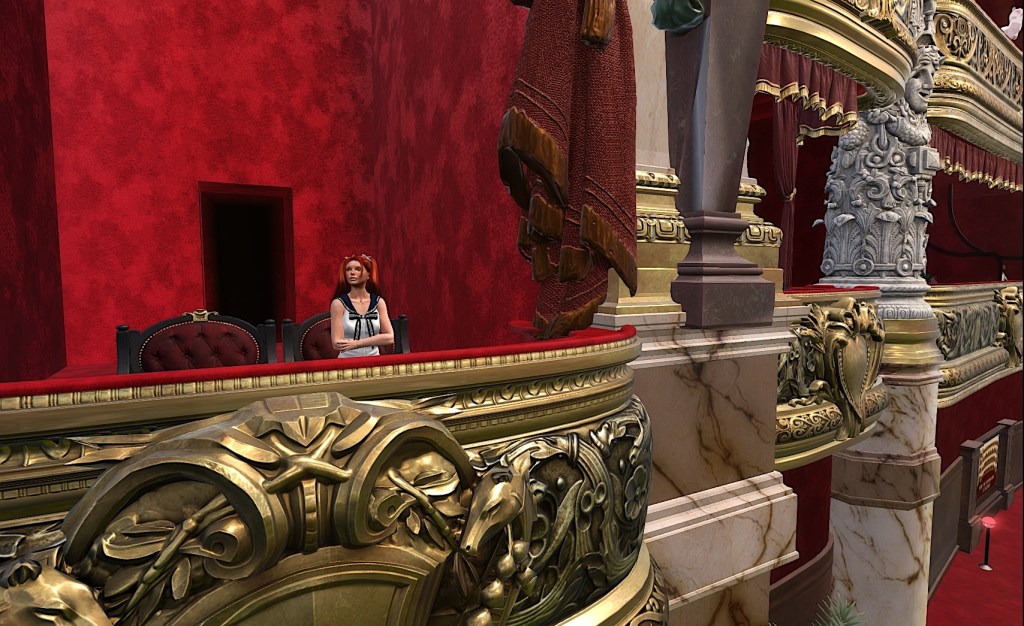
Orpheum Theatre Balcony (See Above)
Trifecta Poster by Liberty Fairelander (who also designed our awesome costumes!)
Golden Palms Hotel Ballroom: https://maps.secondlife.com/secondlife/SLB%20Mesmerize/63/221/31
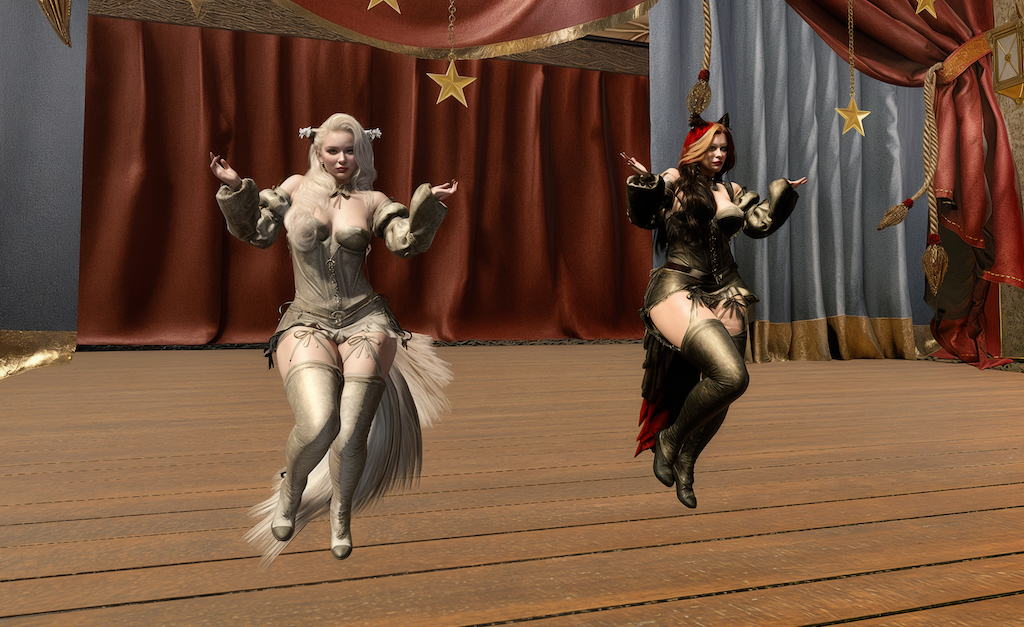
Chevy Rune & Wyldchild Raven on Stage at Golden Palms




Leave a comment