Over the last few days, I’ve enjoyed spending time observing the various celebrations going on at Second Life’s 22nd Birthday, and all of the activity that goes along with this annual event. People-watching in SL is a big part of the fun, as any large-scale happening such as this is sure to bring out the avatars, and sometimes it’s fun spotting the who’s who of SL out amongst us plebians, especially those whose last name happens to be “Linden” or “Mole”. Aside from these two names, however, you’ll also see known SL fashion names, media names, maybe the person whose account you’ve been following for years on Twitter/X but have never met in world before, or possibly someone who happens to have the same last name you do, which in some sense makes them an SL relative, however distant it might be.
When it comes to avatar identity, two things always seem to permeate the culture in our virtual world, and many curious residents of SL will tell you that avatar longevity (i.e. how old the avatar is) and last names are attributes people tend to notice. Spotting an avatar born in the first five years of SL’s existence is always a thrill, and spotting any avatar over 20 years old falls into the realm of a verified “sighting”, complete with a profile screenshot to prove to your friends you saw one. Almost always tied in with a senior avatar’s age is a legacy surname, one which they chose at the time they created their account, and one that, for better or worse, most of them have stuck with ever since.
In the virtual world of Second Life, where avatars can be anything and anyone, names still carry surprising weight. Among the most meaningful aspects of avatar identity is the surname — a feature that has evolved over the platform’s 22 year history. Though Second Life offers near-limitless freedom in appearance and self-expression, the surname remains a quiet but powerful thread, often connecting users to culture, community, and personal history within the grid.
A Brief History of Second Life Surnames
When Second Life launched in 2003, residents chose from a list of pre-determined surnames provided by Linden Lab. This system allowed for a unique blend of creativity and structure: a user could choose a first name freely (e.g., “John”), but the surname came from a curated pool, which the user could select from (e.g., “Nightfire”). As long as no one had that combination, the name became yours and yours alone. Once a surname reached a certain number of accounts attached to it, that name would then be removed from the pool, effectively retiring it from ever being available again.
These surnames rotated, and often reflected whimsical, literary, or fantastical origins. The result was a population whose names often sounded like they came from the same world—distinctly “Second Life” in flavor. Because most surnames usually came and went within the same year, that name would become associated with a time, and lots of older residents were and are quite perceptive at determining an avatar’s approximate age, simply by knowing when that name came out.
For many early residents, surnames became a badge of belonging to a certain era or community. Remember the name Gossipgirl? Some surnames became associated with families, creative groups, or shared histories. Others simply marked when someone joined the grid—“old names” like “Radio,” “Cazalet,” or “Zenovka” are instantly recognizable as legacy accounts, signaling tenure and experience. This all got turned on its head in 2010.
The Rise of Display Names
That year, Linden Lab discontinued the default surname system, replacing it with a universal “Resident” surname and introducing display names, allowing users to appear with virtually any name they wanted above their heads. While this offered more flexibility, many longtime users mourned the loss of surnames as a core identity feature.
With only the Resident surname available now, the pool of unique first names quickly ran out, forcing users to become more creative in choosing a first name that was unique with the “Resident” surname. Moreover, many found this new naming convention to be impersonal or artificial, and no matter which name one chose to display, their real names were inextricably linked to scripted devices such as radars, hud based games and more. Display names, while useful for roleplay and social flexibility, lacked the permanence and traceability of a true surname. Legacy users who still bore distinctive surnames became instantly recognizable as veterans, while post-2010 “Residents”, such as myself, were perpetually seen as newbies, adding another layer of social nuance.
The Return of Surnames
In response to community feedback, Linden Lab reintroduced the ability to choose from a rotating list of last names in 2020—this time as a premium feature. Residents could once again claim new surnames like “Mercury,” “Banana,” or “Hexem,” reawakening the cultural importance of surnames in SL society.
More importantly, existing residents, old or new, could now change their surname, opening up the possibility of reviving family group names, creating clans, or even starting virtual dynasties. Some groups began adopting shared surnames as signs of loyalty, kinship, or branding—whether among artists, DJs, roleplay families, or real-world couples. Partnered couples with different last names could take a new name together if they chose to as well. One of the first names reintroduced was “Bellisserian”, a way for Linden Home residents of the Bellisseria continent to proudly display their sense of community.
For me, having been saddled with the Resident name, this was a welcome change, if not a free one. Originally, only Premium members had this option, and it cost about $50 USD to do it-but eventually, it was opened up to anyone willing to pay for the name change, and the costs went down considerably the higher the plan you might have.
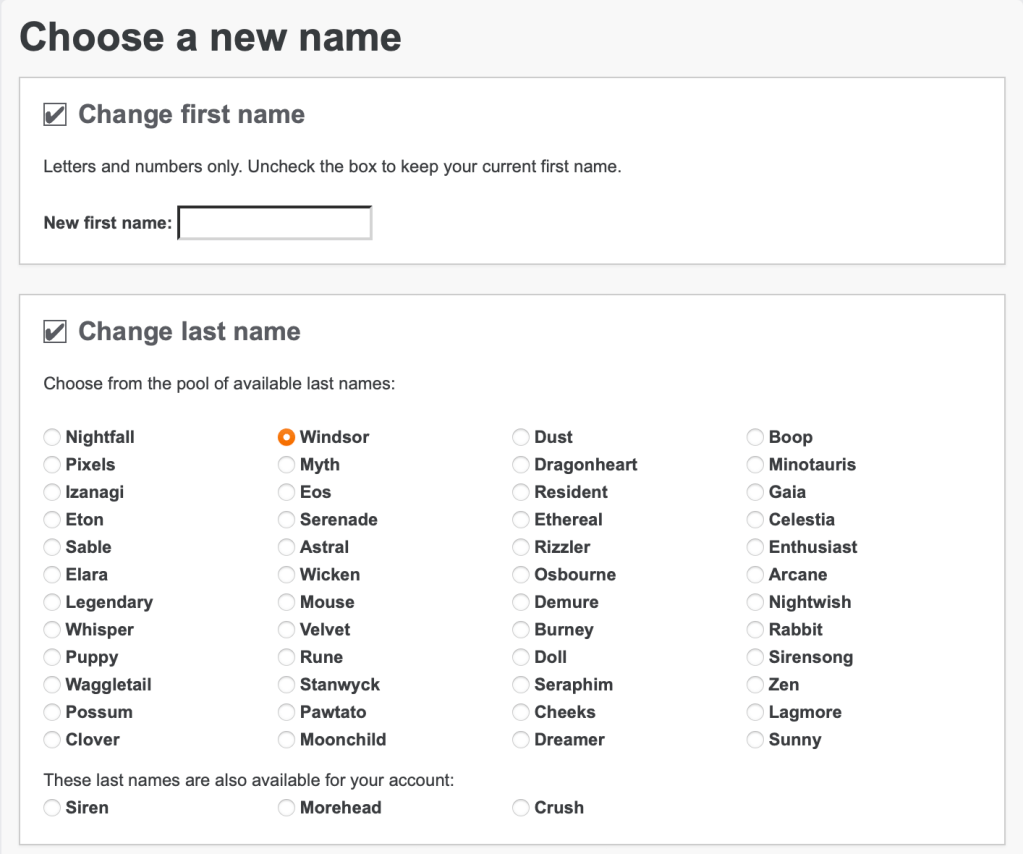
Since April of 2020 until today, about 332 new surnames have been introduced for residents of SL to choose from. Like the original legacy names, new batches are introduced from time to time, and older names are retired from circulation. At any given time, there is an average of about 40 available to choose from. In addition, Linden Lab also introduces limited edition names associated with major holidays, which normally lasts about a month and then are removed from circulation. Special edition names for Second Life birthdays have also become a favorite, usually associated with the chosen theme for that year’s SL birthday. I’ve even noticed, whether by fluke or design, that a couple of original legacy names were briefly (think days) thrown into the pool, such as Irling. Below is the current pool of names available at the time of this article.
Surnames: Symbols of Belonging
In Second Life, a surname can often signal more than a label; it can suggest community. Whether through shared names in a vampire clan, a fashion house, a fantasy kingdom, or a close-knit friend group, surnames help avatars affiliate with chosen “families.” These aren’t always roleplay families, either—many groups in Second Life are based on real-world bonds or long-term friendships.
For others, surnames reflect personal history. Legacy names evoke nostalgia, linking many avatars to SL’s early days. Custom surnames, a pricey but available option in SL, may honor heritage, creativity, or simply personal branding—particularly for creators, performers, or influencers.
This isn’t always the case though…some users, both legacy and resident, are perfectly happy with the name they got at the time they joined, and the great thing about Second Life is that is completely OK. Just having some choice in the matter now is pretty awesome itself. I’ve certainly taken advantage of it more than I care to admit, including a couple of holiday names. Windsor, however, was a name I had wanted and suggested (you can submit your own suggestions for future names) so when it actually appeared in the most recent list, I was happy to be the first to grab the name for myself. Yes, I’m an unapologetic royalist and Anglophile who lives in the virtual Highlands of Scotland. I freely admit it. Whatever the reason, the name resonates with me, just as many others choose names that are significant to them.

More Than Just a Name
In a world as fluid and free as Second Life, where identity can shift with a click, surnames remain one of the few enduring anchors. They offer a way to mark time, build community, and tell a story. When an avatar gains virtual fame for their creations or their expertise, their name often becomes linked with more than just themselves, much like Van Gogh is linked to the RL world of art. Whether a legacy from the early grid, a chosen family name, or a newly minted custom title, a surname in Second Life says: I am someone here. I belong to this world.
As the platform continues to grow and evolve, the power of surnames persists—not just as labels, but as living parts of the virtual world’s social fabric.
See you soon!
~Arabella
Post Notes:
Surname Suggestion Form: https://second.life/suggestname
Surname FAQ’s: https://lindenlab.freshdesk.com/support/solutions/articles/31000155068-changing-your-username-faq/
Change Name (Must be logged into your SL Account: https://accounts.secondlife.com/choose_name
 Second Glances with Arabella
Leave a comment